Contact Us

Phone
08 8294 8664

Email
sale@awdmedical.com

Address

China Best Red Light Therapy Pod for Global Buyers

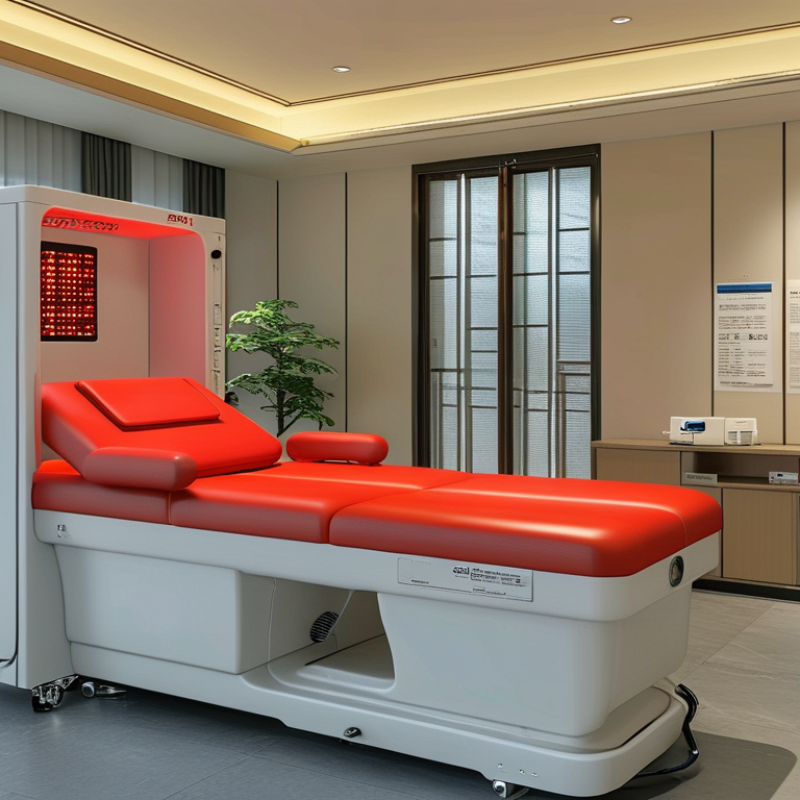
For global buyers, finding the China Best Red Light Therapy Pod involves more than comparing factory prices. A reliable purchasing decision begins with clear specifications, practical testing, and transparent supplier communication. Buyers should examine wavelength ranges, irradiance measurements, treatment space, cooling systems, electrical safety, and user controls. A well-designed pod should feel stable, quiet, and easy to clean after repeated sessions. Small details matter, such as an accessible emergency stop button and a readable control panel.

Chinese manufacturers offer varied designs, from compact wellness pods to larger commercial systems. However, product quality can differ significantly between suppliers. Experienced buyers should request test reports, production photos, warranty terms, and user manuals before placing an order. They should also confirm voltage compatibility, packaging strength, installation support, and replacement-part availability for their destination market. Compliance requirements may vary by country, so independent verification remains essential. Do not rely on marketing claims alone.

The strongest suppliers explain what their equipment can and cannot do. That honesty builds trust. Red light therapy may support wellness routines, but it should not be presented as a guaranteed medical treatment. Buyers should review technical data with qualified professionals when needed. Factory audits, sample orders, and third-party inspections can reduce avoidable risks, although no process is perfect. A thoughtful evaluation may take longer, yet it protects investment, customer safety, and long-term brand reputation. This guide explores the practical standards, supplier questions, and purchasing considerations behind selecting a dependable Chinese red light therapy pod for international markets.
China Best Red Light Therapy Pod for Global Buyers

Red Light Therapy Pods Explained: 630–660 nm and 810–850 nm Bands

China Best Red Light Therapy Pod for Global Buyers

Red Light Therapy Pods Explained: 630–660 nm and 810–850 nm Bands

For global buyers, a red light therapy pod should be judged by measured output, not dramatic advertising. Its wavelength range matters because each band interacts with tissue differently.

630–660 nm is visible red light. It mainly targets shallower tissue near the skin’s surface. Many users choose this range for appearance-focused routines, but results can vary. 810–850 nm is near-infrared light. It penetrates more deeply and usually produces little visible glow. That surprises many people. Neither band guarantees a specific health result, and published evidence remains uneven across applications.

A reliable pod should list irradiance, treatment distance, session time, and wavelength tolerance. Dose depends on all four factors. Ten minutes at one intensity is not equal to ten minutes at another. Look for independent testing and clear electrical safety documentation. Eye protection is also important, especially with intense near-infrared output. People with photosensitivity or ongoing medical treatment should ask a qualified clinician before use.

In practice, buyers can record session length, comfort, and skin response. Stop if unusual irritation appears. More light is not always better. Some product specifications remain unclear, and that deserves careful questioning. Ask whether the stated 630–660 nm and 810–850 nm bands were measured across the whole pod, rather than at one central point. A comfortable design may encourage regular use, but comfort cannot replace accurate measurements.

Red Light Therapy Pods Explained: 630–660 nm and 810–850 nm Bands

Red light therapy commonly uses visible red wavelengths around 630–660 nm, while near-infrared systems use longer, invisible wavelengths around 810–850 nm. The chart shows the lower and upper wavelength limits of each band in nanometers. Wavelength selection alone does not determine treatment results; irradiance, exposure time, distance, and device design also matter.

Photobiomodulation Principles: 4–10 J/cm² Dose and Treatment Timing

China Best Red Light Therapy Pod for Global Buyers

Photobiomodulation uses red or near-infrared light to influence cellular activity. Dose matters more than dramatic brightness. Fluence equals irradiance multiplied by treatment time. For example, 50 mW/cm² delivered for 200 seconds provides 10 J/cm².

Published WALT dosage recommendations show that effective ranges depend on wavelength, tissue depth, and treatment purpose. A practical starting range is 4–10 J/cm², not a universal prescription. The 2023 consensus review in Photobiomodulation, Photomedicine, and Laser Surgery also stresses accurate irradiance measurement and controlled exposure. Buyers should request independent testing data, not only LED counts. Numbers can mislead.

Timing needs restraint. A pod delivering 40 mW/cm² reaches 4 J/cm² in about 100 seconds. At the same output, 10 J/cm² requires roughly 250 seconds. Many protocols use two to five sessions weekly, but evidence remains uneven across wellness applications. Longer sessions may not improve results and can complicate comparison. I would record wavelength, irradiance, distance, skin response, and session duration. Real-world testing is imperfect. Room temperature, body position, and sensor quality can change the delivered dose. Global buyers should prefer adjustable timers, calibrated output reports, and conservative instructions reviewed by qualified professionals.

China Best Red Light Therapy Pod for Global Buyers - Photobiomodulation Principles: 4–10 J/cm² Dose and Treatment Timing

Evaluation Dimension Recommended Reference Range or Value Why It Matters for Global Buyers Verification or Practical Note
Photobiomodulation target Red and near-infrared light delivered to the skin at a controlled irradiance and dose A pod should be assessed by measurable light output rather than appearance, lamp count, or marketing claims. Request independent irradiance measurements at the user position.
Common red-light wavelength band Approximately 630–660 nm Red light is commonly selected for superficial skin-focused photobiomodulation applications. Confirm the peak wavelength and spectral tolerance in the technical specification.
Common near-infrared wavelength band Approximately 810–850 nm Near-infrared light is often included when broader tissue penetration is desired. Check whether the stated output is optical irradiance and not electrical power.
Suggested planning dose 4–10 J/cm² per session as a practical planning range Dose provides a more useful comparison than session duration alone. This is a general reference range, not a universal clinical prescription.
Dose calculation Dose (J/cm²) = Irradiance (W/cm²) × Time (seconds) The formula allows buyers to compare different pod outputs and treatment timers. Use irradiance in W/cm²; 100 mW/cm² equals 0.100 W/cm².
Treatment example at 25 mW/cm² 4 J/cm² = about 160 seconds; 10 J/cm² = about 400 seconds Useful for lower-output settings and conservative starting protocols. Actual time changes if the measured irradiance varies across the pod.
Treatment example at 50 mW/cm² 4 J/cm² = about 80 seconds; 10 J/cm² = about 200 seconds A convenient reference for moderate-output full-body equipment. Confirm whether the value is measured at the recommended user distance.
Treatment example at 100 mW/cm² 4 J/cm² = about 40 seconds; 10 J/cm² = about 100 seconds Shows why high-output devices may require shorter sessions. Higher output does not automatically mean better results; avoid assuming linear clinical benefit.
Irradiance uniformity Compare minimum, maximum, and average irradiance across the treatment area Uneven output can produce different doses on different body regions. Ask for a measurement grid or test report covering the full user position.
Session frequency Begin with the equipment instructions and a conservative schedule; adjust only after observing tolerance Photobiomodulation responses can depend on dose, frequency, body area, and individual factors. Do not increase both dose and frequency at the same time.
Cooling and thermal management Integrated ventilation, temperature monitoring, and user-accessible controls Comfort and heat management are important during full-body sessions. Separate photobiomodulation light output from heat-based claims.
Eye protection Provide suitable eye protection whenever required by the equipment instructions or exposure assessment Bright visible red light can be uncomfortable, and near-infrared light may not be visibly apparent. Follow the device-specific safety instructions and avoid staring directly at LED sources.
Electrical and regulatory documentation Input voltage, frequency, power rating, user manual, risk assessment, and applicable market documentation Requirements differ between markets, including the European Union, United States, United Kingdom, Canada, and Australia. Verify local import, electrical, EMC, optical-safety, and medical-device requirements before purchase.
User safety screening Review photosensitizing medicines, light-sensitive conditions, eye conditions, pregnancy-related concerns, and implanted-device considerations with a qualified professional Individual risks may not be visible from product specifications. Stop use if significant discomfort, skin irritation, or unexpected symptoms occur and seek professional advice.

Reference note: Treatment times above are calculated examples based on stated irradiance values. Actual delivered dose depends on distance, angle, pulsed operation, spectral output, session duration, and irradiance uniformity.

Pod Performance Metrics: 10–100 mW/cm² Irradiance and Light Uniformity

China Best Red Light Therapy Pod for Global Buyers

For global buyers, pod performance starts with measurable irradiance, not attractive specifications. A working range of 10–100 mW/cm² gives users room to adjust exposure intensity for different sessions. However, the highest number is not always the best choice. Excessive intensity may create unnecessary heat and discomfort. Practical testing should confirm output at the user’s actual body position, not only near the light source.

Light uniformity matters just as much. A pod can report strong central output while producing weaker readings near the shoulders, legs, or sides. Testers should map multiple points across the treatment area with a calibrated meter. Record readings at fixed distances, temperatures, and operating times. A narrow spread between readings usually indicates more consistent coverage. Still, results can shift after warm-up. That detail is easy to miss.

Tips: Ask for a full irradiance map, calibration records, wavelength data, and thermal test results. Check whether measurements use the same sensor and distance. Request repeated tests, not one impressive reading. A simple grid diagram can reveal uneven zones quickly. Buyers should also compare comfort during a complete session. A technically strong pod may feel less practical if heat builds around the torso. Measurements guide decisions, but they do not replace careful evaluation. Some published data may remain incomplete, so keep questions specific and documented.

Global Compliance Essentials: IEC 60601-1, ISO 13485, CE, and FDA Pathways

For global buyers, a red light therapy pod should be evaluated as a regulated electrical medical device, not merely as wellness equipment. Its intended use affects every compliance decision. Claims about pain relief, tissue healing, or disease treatment may trigger stricter requirements.

IEC 60601-1 addresses essential electrical safety and basic performance. Testing should cover leakage current, insulation, temperature, electromagnetic compatibility, and abnormal operation. A small detail matters: cable routing can affect both heat and user safety. ISO 13485 demonstrates a controlled quality management system, including supplier checks, production records, complaint handling, and corrective actions. It does not automatically prove that every pod is safe.

CE marking depends on the applicable European framework, device classification, conformity assessment, technical documentation, and post-market surveillance. A declaration alone is not enough. For the United States, the FDA pathway may involve exemption, 510(k) clearance, or De Novo classification, depending on intended use and risk. Registration is not the same as FDA clearance. Buyers should request test reports, risk analysis, labeling, clinical evidence, and traceable serial-number records. Wavelength accuracy, irradiance consistency, treatment timers, emergency shutoff, and eye-protection instructions deserve practical verification. Marketing materials often simplify these points too much. Compliance is a process, and documentation can still contain gaps.

Selecting China Suppliers: Wavelength Accuracy, Warranty, MOQ, and Testing

China Best Red Light Therapy Pod for Global Buyers

Selecting China Suppliers: Wavelength Accuracy, Warranty, MOQ, and Testing

Choosing a red light therapy pod requires more than comparing catalog prices. Verify the stated wavelengths with an independent spectrometer report. Ask whether measurements cover every panel, not only one sample. A supplier should provide irradiance data, test conditions, distance, and tolerance ranges. Vague figures deserve careful questioning.

Warranty terms must name covered parts, response times, repair methods, and shipping responsibilities. A longer warranty is not always stronger. Check exclusions for power supplies, LEDs, fans, and control screens. MOQ also affects risk. A small trial order may cost more per unit, but it can reveal assembly faults early. Large orders should wait for approved samples and documented quality checks.

Tips: Request serial-numbered test reports, a factory video inspection, and a pre-shipment inspection. Confirm electrical safety testing for your target market. Requirements differ by country. Do not assume one certificate proves everything. One common mistake is trusting polished documents without matching them to the delivered pod. The report may describe an older configuration. Ask for dated records and sample photos. Leave room for doubt. Reliable sourcing sometimes means slowing down before signing.

Article Source: