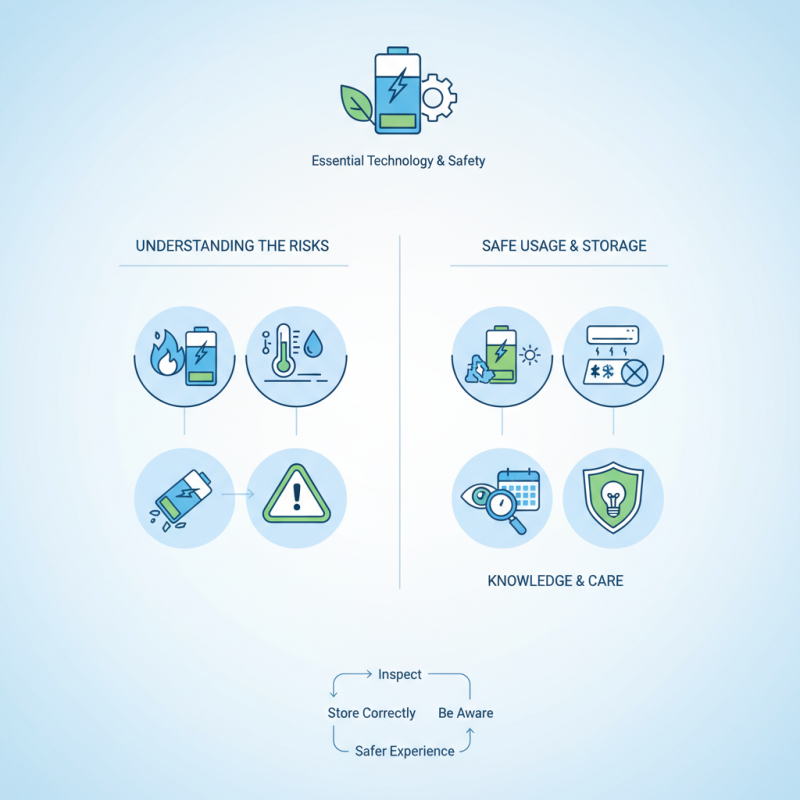
Lithium Batteries Tips for Safe Usage and Storage?
Lithium Batteries are essential in today's technology-driven world. They power our smartphones, laptops, and electric vehicles. However, safe usage and storage of these batteries are critical to prevent accidents. Mismanagement can lead to fires or battery failures.
Understanding lithium batteries is vital. They can overheat or leak if not cared for properly. Always store them in cool, dry spaces. Avoid exposing them to extreme temperatures. Remember, damaged or outdated batteries pose risks. Inspect them regularly for any signs of wear.
Ultimately, knowledge is key. Awareness of proper handling is crucial for safety. Lithium batteries need our attention and care. By following simple guidelines, we can ensure a safer experience. Reflect on your habits with lithium batteries. Are there areas for improvement?
Lithium Battery Basics: Understanding Their Functionality and Risks
Lithium batteries are a crucial part of modern technology. They power devices from smartphones to electric vehicles. Understanding their functionality and risks is vital for safe usage and storage.
Lithium-ion batteries operate on the movement of lithium ions between the positive and negative electrodes. This process generates energy. However, they can also pose risks. According to the National Fire Protection Association, lithium battery fires accounted for over 10,000 incidents in the U.S. last year. Misuse, like puncturing or overheating, can lead to explosions or fires.
Storage conditions play a significant role in safety. Keeping batteries at high temperatures can increase pressure inside the cells. A study from the Battery University found that storage at 60°C reduces battery life to just a few months. It is essential to store batteries in cool, dry places. Avoid direct sunlight and humidity. Regularly inspect batteries for any signs of swelling or leakage. Proper handling and knowledge can prevent serious incidents.
Lithium Battery Safety Tips: Usage and Storage
This chart illustrates the importance of various safety tips for the usage and storage of lithium batteries. The higher the score, the more critical the tip is to ensure safe handling and longevity of the batteries.
Best Practices for Charging Lithium Batteries Safely and Efficiently
When charging lithium batteries, safety is crucial. A report from the International Energy Agency highlights that improper charging can lead to overheating and fires. Always use the charger designed for your battery type. It's common to see users opting for generic chargers, which can cause serious issues.
Monitoring the temperature during charging is essential. Ideally, batteries should not exceed 45°C (113°F) during this process. At higher temperatures, the risk of thermal runaway increases. If you notice any swelling or unusual heat, disconnect the charger immediately. According to industry data, about 10% of battery-related incidents stem from overheating during charging.
Efficiency also matters. Charge batteries in a cool, dry place. Avoid direct sunlight or high humidity. These conditions can degrade battery life and performance. Regularly check battery health and follow recommended guidelines for charge cycles. Many users overlook this, putting them at risk. Remember, even a small lapse can lead to significant consequences. Keep a close watch on your charging habits to ensure safety and efficiency.
Proper Storage Conditions for Lithium Batteries to Extend Lifespan
When it comes to lithium batteries, proper storage is crucial for maximizing their lifespan. Keep your batteries in a cool, dry place. This helps prevent overheating, which can damage the cells. Ideal temperatures range from 20°C to 25°C. Extreme heat or cold can lead to reduced performance or even failure.
Tips for safe usage include not charging batteries overnight. Regular checks are essential. If you notice any swelling or leakage, stop using them immediately. Store them away from flammable materials. A dedicated storage case can protect them from impact.
Avoid fully discharging your lithium batteries. Aim to keep them between 20% and 80% charged. This practice helps maintain their health over time. Long-term storage should also include periodic recharging every few months. This keeps the battery active and prevents deep discharge damage. Properly managing your lithium batteries can make a significant difference in their longevity.
Recognizing Signs of Damage or Wear in Lithium Batteries
When using lithium batteries, it’s crucial to recognize signs of damage or wear. One major indicator is physical deformities. A bulging or misshapen battery can signal internal failures. Always inspect your batteries closely. Look for cracks, dents, or any unusual changes in shape.
Another sign to watch for is unusual heating. If a battery feels warmer than normal during use or charging, it could be unsafe. Additionally, leaking chemicals or corrosion around terminals is a red flag. If you notice any leakage, stop using it immediately.
Always trust your instincts. If a battery behaves differently, take it seriously. Avoid using batteries that show signs of wear. Regular checks can prolong battery life and ensure safety. Careful monitoring can prevent accidents and protect you and your devices.
Disposal and Recycling Guidelines for Lithium Batteries
Lithium batteries are essential for everyday devices. Their disposal and recycling are critical to safety and environmental sustainability. Improper disposal can lead to hazardous leaks. According to the Environmental Protection Agency (EPA), approximately 3 million tons of batteries were discarded in 2018 alone.
Recycling programs for lithium batteries exist in many regions. They can recover up to 95% of the materials used. However, public awareness remains surprisingly low. Many people still throw batteries in regular trash. This is a potential disaster for landfills.
Improper handling poses real dangers. Lithium batteries can catch fire if damaged or improperly disposed of. The National Fire Protection Association (NFPA) reported increased incidents of battery fires in recent years. Choosing proper recycling options is vital. Many retailers and municipalities provide drop-off locations. Communities must engage and educate their residents about safe practices.
Lithium Batteries Tips for Safe Usage and Storage - Disposal and Recycling Guidelines for Lithium Batteries
| Aspect | Guidelines |
| Safe Usage | Do not overcharge the battery. Use a compatible charger. |
| Storage | Store in a cool, dry place away from direct sunlight. |
| Disposal | Do not dispose of in regular trash. Use designated recycling programs. |
| Recycling | Take to a local recycling center or return to the retailer. |
| Safety Tips | Inspect for damage before use. Avoid mixing different battery types. |