
Contact Us

Phone
08 8294 8664

Email
sale@awdmedical.com

Address

China Top Chili Powder Suppliers for Global Buyers

China has become a major sourcing destination for global Chili Powder buyers. Its suppliers serve food manufacturers, restaurant chains, spice distributors, and private-label brands. Yet supplier selection requires more than comparing prices. Product quality can vary by pepper variety, growing region, drying method, and grinding temperature.

Dr. Paul W. Bosland, a respected chile pepper researcher, has said, “The chile pepper is a fruit, not a vegetable.” This simple observation reflects an important purchasing truth. Chili Powder is an agricultural product, not a uniform chemical ingredient. Its color, aroma, heat level, moisture, and microbial condition deserve careful evaluation. Experienced buyers should request product specifications, laboratory reports, allergen statements, and traceability records. They should also confirm whether suppliers can maintain consistent quality across repeat shipments.

Strong Chinese suppliers often provide paprika powder, cayenne powder, crushed chili, and customized heat levels. Some operate modern cleaning, drying, sterilization, and packaging lines. Others rely heavily on trading networks. That difference matters. A bright red sample may still lose color during storage. A low-cost batch may create higher testing or reformulation costs later. Small details matter.

This guide examines China’s leading Chili Powder suppliers through quality control, production capability, certifications, packaging, export experience, and communication reliability. It also considers practical weaknesses, because no supplier is perfect. Buyers should verify every claim independently. A factory visit may help, but it cannot replace batch testing. In the end, dependable sourcing comes from evidence, repeat performance, and honest review—not impressive promises alone.
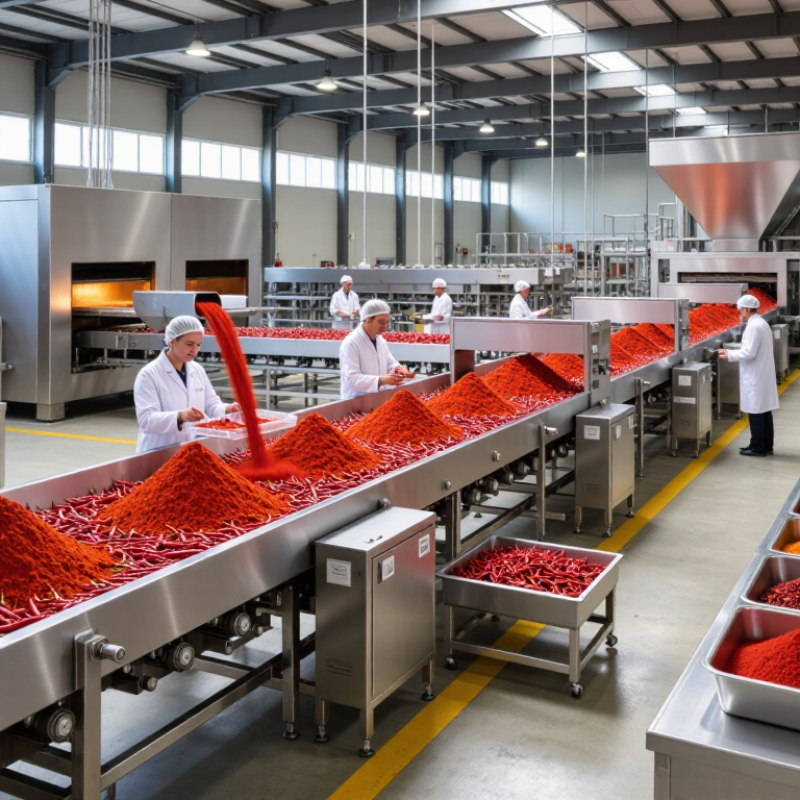
China Top Chili Powder Suppliers for Global Buyers

China’s Chili Powder Industry: An Overview for Global Buyers

China’s chili powder industry serves food manufacturers, wholesalers, and restaurant suppliers worldwide. Production is concentrated in several agricultural regions, including Sichuan, Hunan, Yunnan, and Gansu. Each area offers different heat levels, colors, aromas, and drying conditions.

The supply chain usually begins with contract farming or seasonal purchases. Fresh chilies are sorted, washed, dried, and milled into powder. Some processors use low-temperature drying to protect color and fragrance. Others use standard hot-air systems for higher efficiency. This difference matters. Buyers should request the origin, harvest period, moisture level, mesh size, and capsaicin range before placing an order.

Quality control requires more than a bright red appearance. Reliable processors commonly test moisture, microbial safety, pesticide residues, aflatoxins, and foreign materials. They should also provide batch records and a current certificate of analysis. During factory visits, inspect storage rooms carefully. Clean floors, sealed containers, ventilation, and pest-control records reveal practical discipline. Packaging must protect the powder from humidity and light, especially during long ocean shipments.

Not every supplier communicates technical details well. That weakness deserves attention. A low price may reflect inconsistent raw materials, outdated equipment, or limited testing. Global buyers should compare samples from several production batches, not one attractive sample. Clear specifications, independent testing, and written corrective procedures create a safer purchasing process. Claims still need verification.

Main Chili Powder Varieties and Their Typical Uses

China Top Chili Powder Suppliers for Global Buyers

Chili powder varies by pepper, grind, color, and heat. Cayenne powder often reaches 30,000–50,000 Scoville Heat Units. It suits hot sauces, marinades, and meat seasonings. Paprika is milder and delivers bright red color. It works well in sausages, snacks, soups, and spice blends. Gochugaru has coarse flakes and a fruity heat. It is common in kimchi, dipping sauces, and Korean stews. Bird’s eye chili powder gives sharp heat in curry, noodles, and seafood recipes.

FAOSTAT data for 2023 indicate roughly four million metric tons of dried chilies and peppers were produced worldwide. Trade remains sensitive to moisture, color, and microbial control. ASTA color values help buyers compare paprika quality. ISO 22000 systems support food-safety management, but certification alone is not enough. A supplier should provide batch testing, pesticide results, moisture levels, and mesh-size records. I would not judge quality from color alone. Excessive brightness can hide weak flavor.

Tips: Match the variety to the recipe. Ask for heat results from an independent laboratory. For export orders, request 40–80 mesh samples before approval. Check moisture carefully; powder that feels slightly clumped may store poorly. Supplier data can be incomplete, so keep a retained sample for comparison.

Quality Standards and Safety Requirements for Export

China Top Chili Powder Suppliers for Global Buyers

For global buyers, quality begins with controlled raw materials, not attractive packaging. Reliable suppliers should document chili origin, harvest details, drying methods, and batch identification. Export-grade powder needs consistent color, aroma, particle size, moisture, and pungency. These details affect both food safety and production performance.

A professional supplier should provide recent laboratory reports for pesticide residues, aflatoxins, Salmonella, total plate count, and heavy metals. Testing should follow recognized international methods and the destination country’s requirements. HACCP-based controls, traceability records, calibrated equipment, and clean processing areas strengthen supplier credibility. Buyers should also review certificates directly and compare them with the shipment lot. A certificate alone is not proof.

Tips: Request a pre-shipment sample, sealed retention samples, and a clear corrective-action process. Confirm packaging barriers against moisture, heat, and contamination. Ask how workers handle rejected batches. Small questions reveal large weaknesses.

Experienced importers often inspect facilities or use independent auditors before signing long-term contracts. They also define acceptance limits in the purchase agreement. No safety system is perfect; even careful checks can miss uneven contamination or labeling errors. Regular testing remains necessary. Supplier performance should be reviewed after every shipment, not only after a problem appears.

China Chili Powder Export Quality and Safety Benchmarks

Selected maximum contaminant levels commonly applied to dried chili and spice products in the European Union. Values are shown in μg/kg.

Moisture

Codex maximum for dried chili peppers: 11%.

Salmonella

Export lots should be absent in a 25 g analytical sample.

Sudan Dyes

Sudan I–IV are unauthorized colorants in food and should not be detected.

Reference framework: European Commission Regulation (EU) 2023/915 for contaminants in food and Codex CXS 326-2017 for dried chili peppers. Import-country requirements, pesticide limits, microbiological criteria, and testing methods may vary.

How to Evaluate Chinese Chili Powder Suppliers

China Top Chili Powder Suppliers for Global Buyers

Evaluating a Chinese chili powder supplier requires more than comparing prices. I look for documented production experience, clear product specifications, and stable communication. A reliable supplier should explain the chili variety, origin, heat range, mesh size, moisture level, and processing method. Vague answers create risk.

Ask for recent certificates of analysis from independent laboratories. Check microbial limits, pesticide residues, heavy metals, moisture, and color consistency. Match the report with your importing country's requirements. Request production samples from different batches, not only one attractive sample. Taste, aroma, color, and particle size can change between harvests.

Traceability matters. The supplier should identify farms, processing dates, lot numbers, and packaging conditions. Photos help, but an organized video audit or qualified factory visit provides stronger evidence. Inspect cleaning equipment, storage areas, pest controls, and sealed packaging. Small details count.

Communication reveals practical reliability. Does the supplier answer technical questions precisely? Can they explain delays or rejected test results without hiding problems? I have found that fast replies do not always mean strong quality control. Documents may look complete, yet batch performance can still vary. Independent testing remains necessary, especially before a large order.

Discuss minimum quantities, lead times, export documents, and shipment protection in writing. Food-grade inner bags, dry storage, and moisture-resistant cartons help preserve the powder during transit. A professional supplier accepts reasonable verification, even when it slows the deal. That patience is useful evidence.

Ordering, Packaging, Shipping, and Import Considerations

China’s chili powder supply chain begins with a precise purchase specification. State mesh size, color, heat level, moisture limit, origin, and testing requirements. Use HS code 0904.22 when discussing crushed or ground Capsicum products. UN Comtrade uses this classification for international trade reporting. Request a representative sample, batch records, certificate of analysis, and production lead time. A low quotation deserves careful questions, although it is not automatically unreliable.

Packaging should protect aroma and prevent moisture migration. Food-grade inner liners inside sealed cartons or woven bags are common choices. Ask for pallet dimensions, net weight, gross weight, and container loading photos. Confirm whether materials meet destination-market food-contact rules. The Codex General Standard for Contaminants and Toxins in Food and Feed provides useful reference limits. Testing should consider Salmonella, aflatoxins, pesticide residues, heavy metals, moisture, and artificial coloring. No checklist catches everything.

For shipping, agree on Incoterms, insurance, port responsibilities, and document ownership before production. The World Bank’s 2023 Logistics Performance Index ranked China 19th among 139 economies, with an overall score of 3.7. Port performance can still vary by season and destination. Use moisture protection during sea freight, especially in humid routes. Importers should verify labels, ingredient declarations, certificates, customs documents, and local inspection rules before dispatch. A practical weakness is relying on one pre-shipment test; retain samples and arrange arrival testing when the cargo is commercially important.

China Top Chili Powder Suppliers for Global Buyers - Ordering, Packaging, Shipping, and Import Considerations

Category Data Dimension Typical Commercial Data or Requirement Buyer Action Important Notes
Product Product form Ground dried fruits of Capsicum or Pimenta; commonly supplied as fine, medium, or coarse chili powder. Specify powder fineness, color, heat level, and intended application. Particle-size ranges should be confirmed by sieve analysis or an agreed product specification.
Product Heat level Heat is commonly stated in Scoville Heat Units (SHU); commercial products may range from mild levels below 1,000 SHU to very hot varieties above 100,000 SHU. Request a laboratory result or agreed SHU tolerance range for each lot. Actual heat can vary with variety, growing conditions, harvest, and processing.
Product Moisture and quality A typical commercial target is moisture below 10%, subject to the buyer’s specification and local regulatory limits. Include moisture, foreign matter, ash, color, and microbiological limits in the purchase contract. Do not treat a typical target as a guaranteed specification without a signed product sheet.
Ordering Minimum order quantity Bulk orders are often quoted by metric ton or pallet; trial and retail-ready orders may have higher unit costs and separate minimums. Ask for separate minimum quantities for bulk, private-label, and custom-printed packaging. The minimum quantity depends on milling, packing, artwork, and testing requirements.
Ordering Sampling and approval A representative pre-shipment sample and a retained production sample are commonly used for comparison. Approve the sample in writing and define acceptable tolerances before production. A sample should not replace lot-specific testing for safety-sensitive shipments.
Packaging Bulk pack sizes Common bulk formats include 10 kg, 20 kg, and 25 kg food-grade bags or lined cartons. Select pack size according to warehouse handling, pallet configuration, and shelf-life needs. Packaging materials must be suitable for direct or indirect food contact as applicable.
Packaging Moisture and light protection Multi-layer bags, sealed inner liners, and opaque or light-resistant packaging are commonly used to reduce moisture, oxygen, and light exposure. Request the packaging structure, sealing method, and packaging-material declaration. Poor barrier protection can accelerate color loss, caking, and quality deterioration.
Packaging Traceability label Labels normally identify product name, net weight, lot or batch number, production date, best-before date, storage conditions, and country of origin. Approve the label artwork against destination-market requirements before printing. Mandatory declarations differ by destination country and sales channel.
Shipping Transport mode Ocean freight is generally used for commercial bulk shipments; air freight is faster but normally more expensive per kilogram. Compare total landed cost, transit time, cargo value, and stock urgency. Transit time varies by port pair, season, customs clearance, and carrier schedule.
Shipping Incoterms Common quotations may use EXW, FOB, CIF, or DAP, depending on the agreed division of freight, insurance, customs, and delivery responsibilities. State the named place or port and the selected Incoterms rule and version in the contract. Incoterms do not determine import duties, product compliance, or ownership transfer in every legal system.
Shipping Shipping documents Typical documents include a commercial invoice, packing list, transport document, certificate of origin when required, and relevant inspection or laboratory certificates. Send document requirements to the supplier and freight forwarder before shipment booking. Document requirements vary by product use, destination, customs authority, and preferential-duty program.
Import HS classification Ground or crushed Capsicum or Pimenta is commonly associated with HS 0904.22, but national tariff schedules may subdivide the code. Obtain a binding or written tariff determination from the destination customs authority where possible. Do not rely only on a supplier-provided HS code for duty or licensing decisions.
Import Food safety controls Buyers may need controls for Salmonella and other pathogens, pesticide residues, aflatoxins, ochratoxin A, heavy metals, unauthorized colors, and foreign matter. Confirm destination limits and arrange testing through a competent laboratory before shipment or arrival. Testing requirements and maximum limits differ among countries and product categories.
Import Importer responsibilities The importer is commonly responsible for customs entry, duties and taxes, food-business registration where applicable, labeling compliance, and recall traceability. Appoint a qualified customs broker and confirm all permits before placing the order. Import approval should be checked before production, not after the cargo has departed.
Storage Storage conditions Store in a cool, dry, clean, well-ventilated area away from direct sunlight, strong odors, moisture, and incompatible chemicals. Use pallets, maintain lot separation, and apply first-expired-first-out inventory control. Actual shelf life must follow the validated product specification and storage conditions.