How to Choose Transmagnetic Brain Stimulation Equipment?
Choosing Transmagnetic Brain Stimulation equipment requires more than comparing prices and advertised output levels. The right system must match the intended clinical or research application, patient population, treatment protocols, and facility resources. A credible evaluation should begin with regulatory authorization, published evidence, and guidance from qualified neurologists, psychiatrists, biomedical engineers, and trained operators.
Performance details deserve close attention. Consider stimulation intensity, pulse frequency, waveform control, coil design, positioning accuracy, cooling capacity, and treatment-session stability. A comfortable coil can matter during repeated sessions. Reliable software should record settings, operator actions, and patient responses without creating unnecessary complexity. Safety features also require careful inspection, including emergency stops, overheating protection, acoustic considerations, and compatibility with screening procedures for implants or other medical conditions.
Look beyond the machine.
Supplier support can determine long-term value. Ask about installation, calibration, maintenance intervals, staff training, warranty coverage, and access to replacement parts. Independent service documentation is useful, especially when marketing claims seem unusually broad. A lower purchase price may hide expensive downtime or limited technical support. Conversely, the most advanced platform may exceed a small clinic’s practical needs. No device is perfect. Even experienced teams can overlook workflow problems, room acoustics, or patient comfort. This guide will examine those trade-offs through an evidence-informed and experience-aware lens, helping readers compare equipment with appropriate caution. The final decision should remain with qualified professionals who can assess local regulations, clinical goals, and individual patient risks before procurement or use.
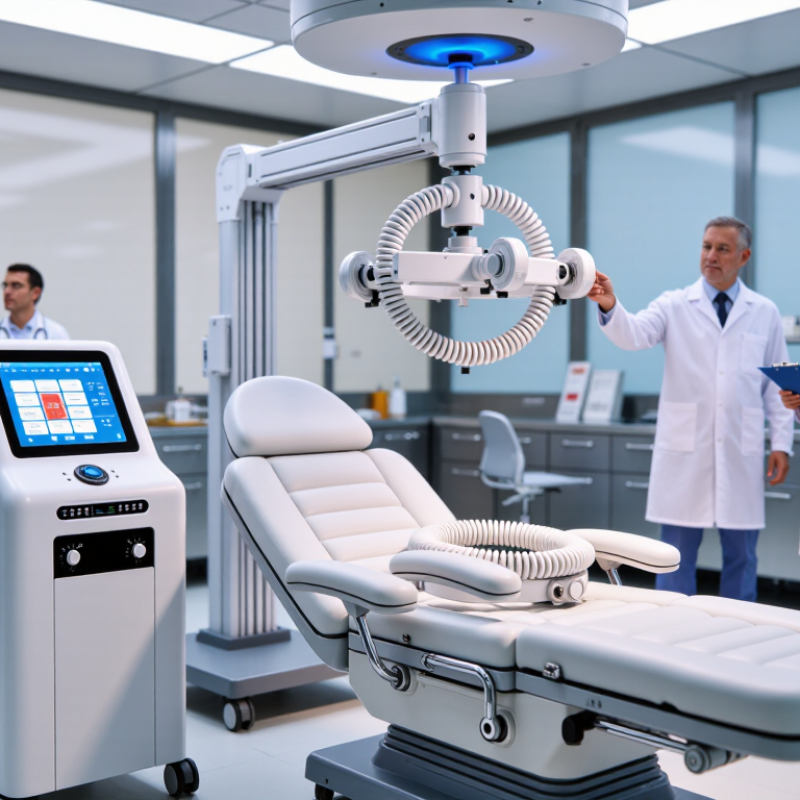
Understanding Transmagnetic Brain Stimulation Equipment and Its Applications
Understanding Transcranial Magnetic Stimulation Equipment and Its Applications
Transmagnetic brain stimulation is commonly called transcranial magnetic stimulation, or TMS. It uses brief magnetic pulses to influence targeted cortical regions without surgery. The need is substantial.
The WHO World Mental Health Report 2022 estimates that nearly one billion people lived with a mental disorder in 2019. The Global Burden of Disease Study 2019 estimated about 280 million cases of depressive disorders worldwide.
Equipment selection should begin with the intended application, not the advertised pulse count. Depression, obsessive-compulsive disorder, migraine, and research protocols may require different coils, frequencies, intensities, and treatment schedules.
Check whether the device has authorization for the planned indication in your jurisdiction.
Read the evidence carefully. NICE guidance and professional TMS consensus recommendations emphasize patient screening, motor-threshold measurement, hearing protection, emergency procedures, and trained supervision.
Small details matter. A figure-eight coil can support more focused stimulation. Neuronavigation may improve targeting when anatomy varies between patients.
Cooling systems can help during repeated sessions. Accurate session logs should record intensity, pulse number, coil position, adverse effects, and operator settings.
The device should also provide clear access to maintenance records and calibration data.
No device is perfect. A polished interface cannot correct poor targeting or weak clinical training.
Buyers should compare independent safety evidence, service response times, electrical requirements, and training quality.
The uncomfortable question is often overlooked: can the clinic use every advertised feature consistently?
Identifying Clinical, Research, and Patient-Specific Equipment Requirements
How to Choose Transmagnetic Brain Stimulation Equipment?
Clinical, research, and patient-specific needs should guide every equipment decision. Clinical systems require precise output control, reliable stimulation timing, and clear safety monitoring. A trained clinician should review emergency functions, treatment records, and operator controls before purchase. Small details matter. For example, an easy-to-read display can reduce setup errors during a busy appointment. Equipment should also support documented protocols and current clinical requirements in the intended region.
Research equipment needs broader flexibility. Investigators may require adjustable pulse patterns, interchangeable coils, accurate positioning tools, and data export options. Confirm whether the system records stimulation intensity, session duration, and coil placement. These details improve repeatability across participants and sites. Independent calibration is valuable, although it can add time and expense. A lower purchase price may become costly when software, maintenance, or training are excluded.
Patient-specific selection demands careful assessment. Head shape, treatment target, mobility, comfort, and sensory sensitivity can affect the practical choice. A lightweight coil may help some patients, while another may need stronger positioning support. Hearing protection, adjustable seating, and simple instructions can improve tolerance. Screening must be completed by qualified professionals, with appropriate medical oversight and informed consent. No checklist replaces judgment. Teams may still misjudge comfort or workflow after testing. A supervised demonstration often reveals problems that specifications hide.
Comparing Stimulation Parameters, Coil Designs, and Device Features
How to Choose Transmagnetic Brain Stimulation Equipment?
Selecting transmagnetic brain stimulation equipment requires more than comparing maximum output. Examine intensity range, pulse frequency, train duration, and waveform control. These parameters shape the stimulation experience and research value. A higher output is not automatically better. It may increase discomfort, heating, or unnecessary electrical demand. Look for precise adjustment, stable pulse delivery, and clear emergency controls. Operators should verify technical specifications against current clinical guidance and local regulations.
Coil design changes how energy reaches the target area. Figure-eight coils usually provide more focused stimulation, while circular coils can cover a broader region. Some systems use deeper-field designs, but depth claims need careful review. Ask for independent evidence, not only laboratory diagrams. Check coil weight, cable flexibility, cooling performance, and positioning support. A heavy coil becomes tiring during repeated sessions. Small details matter.
Device features also influence reliability. Useful systems record session settings, display real-time output, and prevent accidental parameter changes. Built-in monitoring may track temperature, contact, or mechanical position. Verify calibration procedures and service access before purchase. I would also test the interface with actual operators. A polished screen can still hide confusing workflows. That is an easy mistake. Equipment should support trained professionals, documented protocols, and consistent maintenance. Human judgment remains essential, especially when published evidence is limited or conflicting.
How to Choose Transcranial Magnetic Stimulation Equipment?
Comparing stimulation parameters, coil designs, and device features helps match equipment to the intended clinical or research protocol. The chart shows representative protocol examples; actual settings depend on the target, indication, coil, and safety limits.
Figure-of-Eight Coil
Provides relatively focal stimulation and is commonly selected when precise cortical targeting is important.
Circular Coil
Produces a broader magnetic field and may be useful when wider stimulation coverage is preferred over focality.
Double-Cone or Deep-Field Coil
Is designed to reach deeper or less accessible targets, generally with a broader field and potentially greater discomfort.
Device Features
Prioritize accurate output control, programmable train timing, coil cooling, emergency stop functions, treatment logging, and optional neuronavigation compatibility.
Representative examples: 1 Hz and 10 Hz repetitive stimulation, intermittent theta-burst stimulation, and continuous theta-burst stimulation. Protocol parameters should be selected and verified by qualified professionals according to applicable safety guidance.
Selecting a Supplier, Verifying Compliance, and Planning the Purchase
How to Choose Transmagnetic Brain Stimulation Equipment?
Supplier selection should begin with evidence, not attractive specifications. In practical procurement, the first quotation is rarely the lowest real cost. Request certificates, authorization documents, clinical protocols, maintenance records, and user training plans. Confirm the supplier operates under a quality system such as ISO 13485. The equipment should also address applicable IEC 60601 electrical safety and electromagnetic compatibility requirements. Ask for documents, not screenshots. A weakness in many evaluations is trusting sales summaries too quickly.
Compliance must match the installation country and intended clinical use. Verify registration with the relevant medical-device authority, labeling requirements, cybersecurity controls, and adverse-event reporting procedures. The World Health Organization reported that nearly one in eight people lived with a mental disorder in 2019, showing why dependable access matters. A 2024 Grand View Research analysis estimated the global transcranial magnetic stimulation market at about US$1.1 billion in 2023, with continued growth expected through 2030. Market growth does not prove clinical suitability.
Purchase planning should include room preparation, electrical testing, staff training, software updates, calibration, warranty coverage, and response times for repairs. Compare the five-year ownership cost, not only the equipment price. Request a demonstration using realistic treatment workflows. Record setup time and operator steps. My checklist would still be incomplete without feedback from clinicians and technicians. Their small concerns often reveal large delays. Leave budget for unexpected service needs. That part is easy to underestimate.